

This project focuses on the development of a visual concept for a natal chart that simplifies the understanding of complex astrological terminology.
This project focuses on the development of a visual concept for a natal chart that simplifies the understanding of complex astrological terminology.
By transforming traditional chart structures into a clear visual system, the design improves readability, enhances interpretation, and provides meaningful explanations through visual hierarchy rather than isolated symbols.
The comparison between a classic natal chart and its redesigned version illustrates how graphic design can turn complex astrological data into an accessible and intuitive experience.
By transforming traditional chart structures into a clear visual system, the design improves readability, enhances interpretation, and provides meaningful explanations through visual hierarchy rather than isolated symbols.
The comparison between a classic natal chart and its redesigned version illustrates how graphic design can turn complex astrological data into an accessible and intuitive experience.

Standard Natal Chart - Key Structure & Hierarchy
This slide shows a traditional natal chart with visual emphasis on key aspects, configurations, elements, and modalities.
The design reorganizes astrological data by importance, helping the viewer focus on the most influential structures that shape personality before exploring secondary details.
Standard Natal Chart - Key Structure & Hierarchy
This slide shows a traditional natal chart with visual emphasis on key aspects, configurations, elements, and modalities.
The design reorganizes astrological data by importance, helping the viewer focus on the most influential structures that shape personality before exploring secondary details.

Elements & Modalities | Decision-Making Patterns
This section focuses on the key structural components of the natal chart that shape a person’s character, behavior, and habitual patterns of decision-making.
The element distribution reflects how a person processes information, responds emotionally, and interacts with their inner and outer world.
It highlights whether decisions are driven more by logic, emotions, intuition, action, or practicality.
Modalities describe the way a person initiates actions, adapts to change, and maintains stability.
Together, they reveal a natural behavioral pattern - how an individual approaches challenges, responds to external circumstances, and positions themselves within social environments.
Elements & Modalities | Decision-Making Patterns
This section focuses on the key structural components of the natal chart that shape a person’s character, behavior, and habitual patterns of decision-making.
The element distribution reflects how a person processes information, responds emotionally, and interacts with their inner and outer world.
It highlights whether decisions are driven more by logic, emotions, intuition, action, or practicality.
Modalities describe the way a person initiates actions, adapts to change, and maintains stability.
Together, they reveal a natural behavioral pattern - how an individual approaches challenges, responds to external circumstances, and positions themselves within social environments.

Hemispheres, Aspects & Chart Pattern | Deeper Structure
This block reveals deeper structural patterns of the natal chart that are not easily visible at first glance.
Hemispheres show the direction of focus, aspects reflect the complexity of growth, and the chart pattern describes the habitual structure of personality and life orientation.
Hemispheres, Aspects & Chart Pattern | Deeper Structure
This block reveals deeper structural patterns of the natal chart that are not easily visible at first glance.
Hemispheres show the direction of focus, aspects reflect the complexity of growth, and the chart pattern describes the habitual structure of personality and life orientation.

This section focuses on how a person approaches situations, gains experience, and applies inner knowledge in real life.
Zones reflect different modes of personal development and spiritual maturity — the ability to view situations from multiple perspectives and respond with flexibility rather than rigid patterns.
Energy balance describes how a person acts and sustains themselves over time.
Yang energy reflects active movement, initiative, and goal-oriented behavior, while Yin energy represents preservation, reflection, and the ability to maintain inner stability.
Together, zones and energy provide insight into how a person navigates challenges, balances action with reflection, and applies their inner resources in everyday life.
This section focuses on how a person approaches situations, gains experience, and applies inner knowledge in real life.
Zones reflect different modes of personal development and spiritual maturity — the ability to view situations from multiple perspectives and respond with flexibility rather than rigid patterns.
Energy balance describes how a person acts and sustains themselves over time.
Yang energy reflects active movement, initiative, and goal-oriented behavior, while Yin energy represents preservation, reflection, and the ability to maintain inner stability.
Together, zones and energy provide insight into how a person navigates challenges, balances action with reflection, and applies their inner resources in everyday life.

Final Visual Synthesis
Each layer of the chart - elements, modalities, planetary distributions, aspects, zones, and energy is reflected visually and corresponds directly to the explanations outlined in the earlier sections.
The chart no longer functions as a collection of isolated symbols, but as a unified visual language that communicates personality structure, behavioral patterns, and life dynamics at a glance.
The result is a clear and holistic visual representation, where interpretation emerges naturally through design, allowing the viewer to perceive the essence of the natal chart without the need to decode it element by element.
Final Visual Synthesis
Each layer of the chart - elements, modalities, planetary distributions, aspects, zones, and energy is reflected visually and corresponds directly to the explanations outlined in the earlier sections.
The chart no longer functions as a collection of isolated symbols, but as a unified visual language that communicates personality structure, behavioral patterns, and life dynamics at a glance.
The result is a clear and holistic visual representation, where interpretation emerges naturally through design, allowing the viewer to perceive the essence of the natal chart without the need to decode it element by element.

Personal Planets
Personal planets describe an individual’s core personality.
They reflect emotions, thinking patterns, motivation, and everyday self-expression - how a person experiences and responds to the world on a personal level.
Personal Planets
Personal planets describe an individual’s core personality.
They reflect emotions, thinking patterns, motivation, and everyday self-expression - how a person experiences and responds to the world on a personal level.
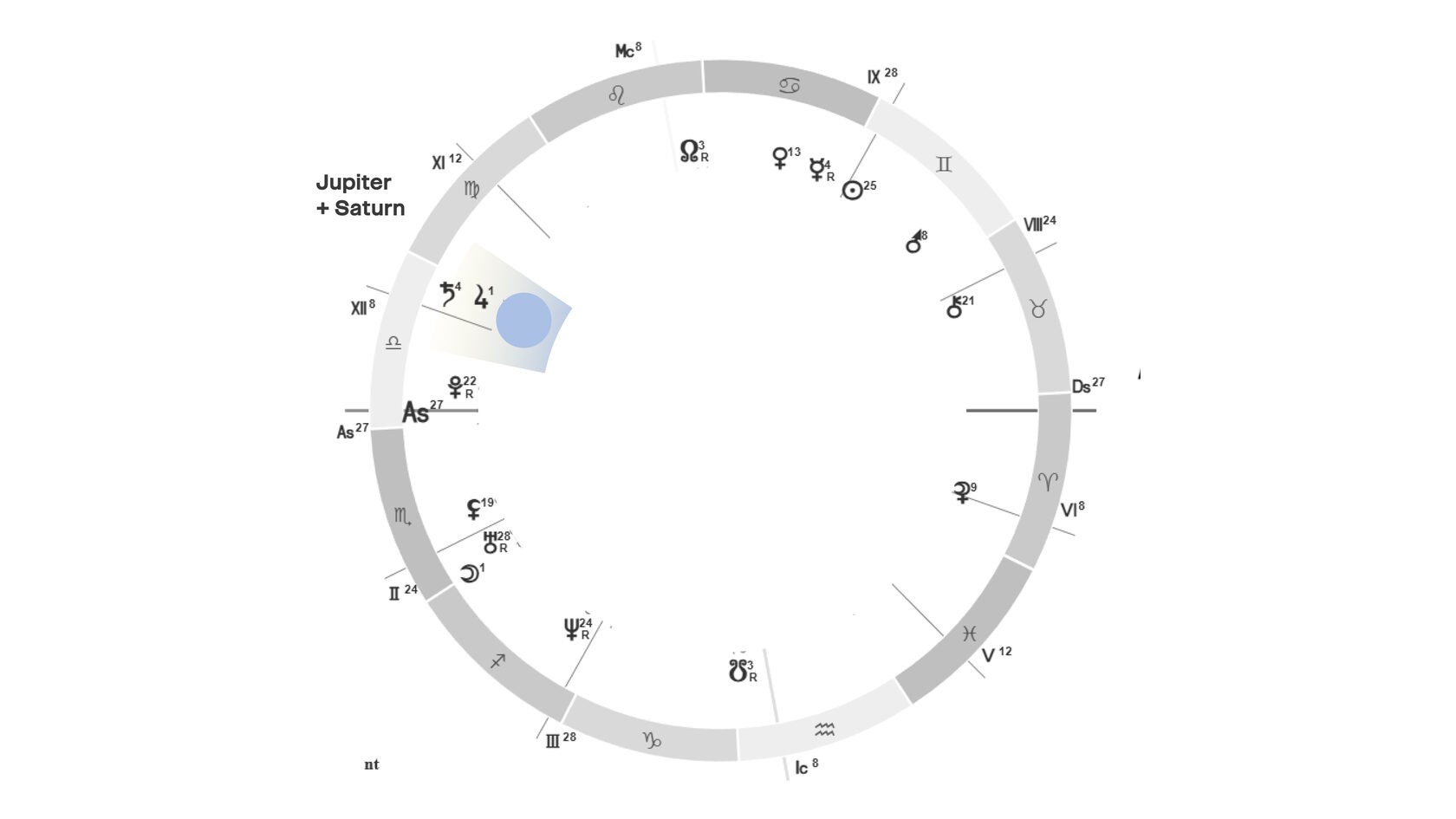
Social Planets
Social planets, Jupiter and Saturn, describe interaction with society and external structures.
They reflect social roles, responsibility, maturity, and behavioral patterns shaped through experience and collective expectations.
Social Planets
Social planets, Jupiter and Saturn, describe interaction with society and external structures.
They reflect social roles, responsibility, maturity, and behavioral patterns shaped through experience and collective expectations.

Outer Planets
Outer planets represent long-term, generational influences.
They reflect deep transformation, collective themes, and gradual shifts in values that shape life direction over time.
Outer Planets
Outer planets represent long-term, generational influences.
They reflect deep transformation, collective themes, and gradual shifts in values that shape life direction over time.

Key Characteristics
Formed by special astrological points rather than planets.
They describe life purpose, hidden talents, shadow traits, luck, and deeper personal themes that influence long-term growth.
Key Characteristics
Formed by special astrological points rather than planets.
They describe life purpose, hidden talents, shadow traits, luck, and deeper personal themes that influence long-term growth.

Dispositor Chains show how different parts of the natal chart influence each other through cause and effect. They help explain how inner tendencies turn into real-life experiences.
Planetary Dispositor Chains show how planetary energies activate actions and decisions.
They explain which inner motivations drive behavior and trigger repeating life patterns.
House Dispositor Chains focus on life areas rather than planets.
They show how different spheres of life are connected and influence one another over time.
Dispositor Chains show how different parts of the natal chart influence each other through cause and effect. They help explain how inner tendencies turn into real-life experiences.
Planetary Dispositor Chains show how planetary energies activate actions and decisions.
They explain which inner motivations drive behavior and trigger repeating life patterns.
House Dispositor Chains focus on life areas rather than planets.
They show how different spheres of life are connected and influence one another over time.